

Blue Box Season 2: Taiki Faces the Pressure, On and Off the Court

Share
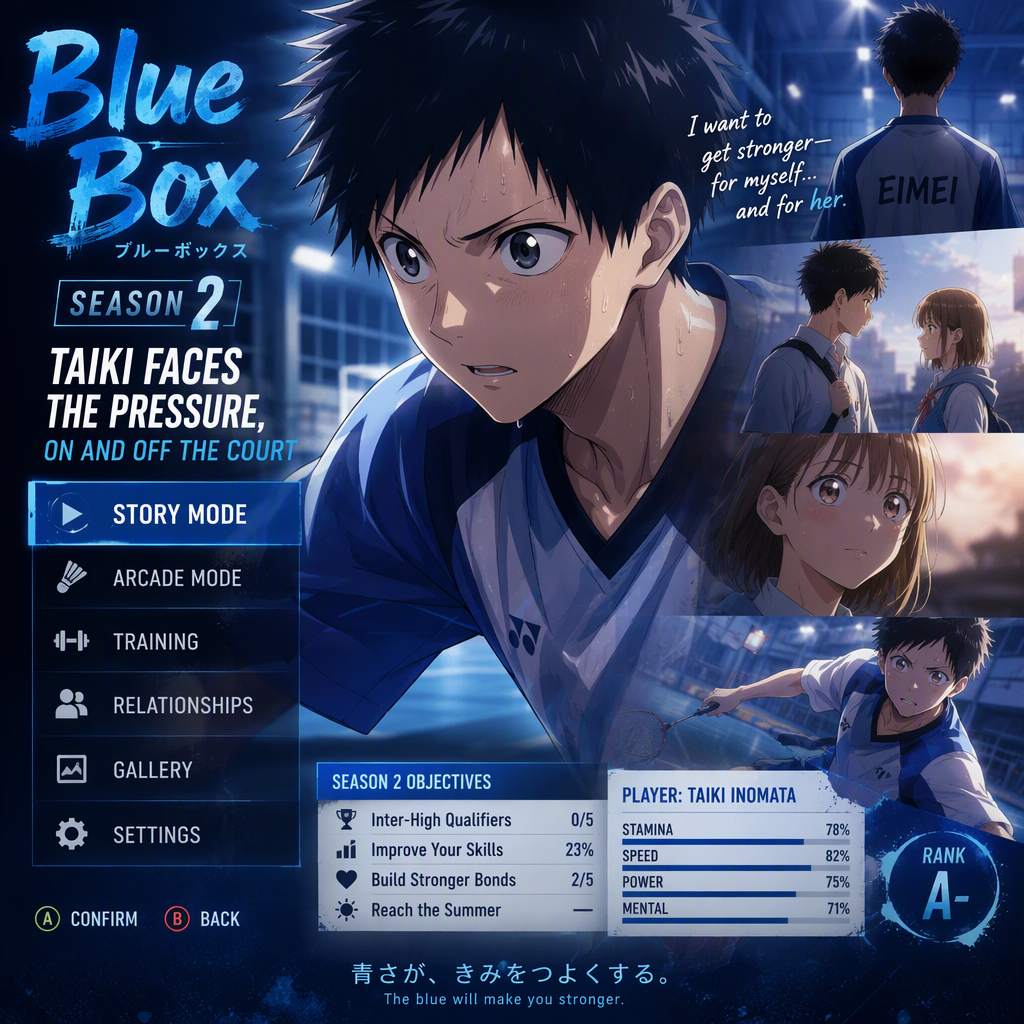
🎮 AI-drawn 可愛い fan art 'ish. No humans were harmed in the render
Squad Goals Vibe 💃🏾
Blue Box season 2 isn’t just a sports drama, it’s a whole vibe check on balancing ambition and relationships. Taiki’s struggle mirrors every Black creative trying to hustle without losing their soul. Netflix might be delivering the show, but this story belongs to the squad living it.
🏀 Court Pressure Prism
Netflix’s Blue Box is back for season two, and the tension is already cutting through the gym air like a sharp elbow on the rebound. But let’s not get distracted by the glossy production values or the slow-burn romance that keeps shippers glued to their screens. This season’s premiere lands heavier than just another coming-of-age sports drama. Taiki’s journey isn’t simply about basketball or teenage love; it’s about the suffocating weight of expectations, and how that pressure hits different when you’re a young Black kid navigating systems that always seem ready to box you in.
” the question isn’t just about hoops. It’s about the unrelenting demand for Black kids, especially Black boys, to prove their worth over and over again. There’s no space to stumble, no room for error. Every shot has to be perfect, every decision flawless, because the margins for failure are razor-thin when the world is already betting against you. We’ve seen this story play out in real life too many times to count, from classrooms to courtrooms to locker rooms, where Black youth are held to standards that no one else has to meet. And if they don’t measure up? ”
That’s what makes Taiki’s quiet struggle resonate so deeply. He’s fighting battles on multiple fronts: trying to prove himself as a basketball player, grappling with his own insecurities, and navigating the complexities of young love with Chinatsu. What Blue Box captures, whether intentionally or not, is the way these pressures compound for Black kids. Taiki can’t just play the game for the love of it, or pursue a romance without scrutiny. Every move he makes feels scrutinized, evaluated, judged. And let’s be real: that’s not just a basketball thing. That’s a Black life thing.
But here’s where Blue Box edges close to something bigger.
. Taiki’s story isn’t just his. It’s a mirror to how our systems treat young Black talent, whether it’s on the court, in the classroom, or in the workplace.
Taiki’s story isn’t just his. It’s a mirror to how our systems treat young Black talent, whether it’s on the court, in the classroom, or in the workplace. The idea of “betterment” that’s teased in the premiere, the push to be “better” in order to earn your space, is a trap, one rooted in a society that profits off Black labor but rarely invests in Black humanity. It’s exhausting to live under constant surveillance, where you’re expected to perform miracles while the goalposts keep shifting.
This isn’t just about Taiki. It’s about every Black kid who’s ever felt like they have to balance their dreams against the weight of systemic expectations. It’s about the toll that pressure takes, the mental strain that rarely gets addressed, and the ways communities rally to protect and nurture Black youth when institutions refuse to. Watching Taiki navigate his world reminds us that the fight isn’t just on the court. It’s in the policies, the stereotypes, the power structures that shape his reality.
So what does it mean for us? Blue Box may be fiction, but it’s tapping into something real. It’s a call for us to hold space for the young Taikis in our lives, space where they can fumble, explore, and grow without the weight of the world crushing them. And it’s a reminder that we need to challenge the systems that put that weight there in the first place. Let Taiki’s story serve as a spark to reimagine what “betterment” can look like, not as a relentless grind to meet someone else’s standard, but as an affirmation of Black kids’ right to thrive on their own terms. Netflix might not say it, but we can: this isn’t just about basketball. It’s about freedom. ✊🏾
🏀 Grind Never Sleeps
Taiki’s basketball season starts with sweaty palms and existential dread, Netflix reminds you that even fictional teens can’t dodge the grind culture.
🏀 Pressure Hits Home Court
Blue Box Season 2 is more than just anime, it’s a space where Black fans can see grit, ambition, and emotional depth reflected in characters navigating pressure, systems, and success. Stories like Taiki’s resonate because they mirror the balancing act that Black athletes and creatives live every day, on and off the court. This is cultural currency, and we don’t need to ask if we have time for it, we make time.