
Nintendo says physical games aren’t going anywhere, fans still love them

Share
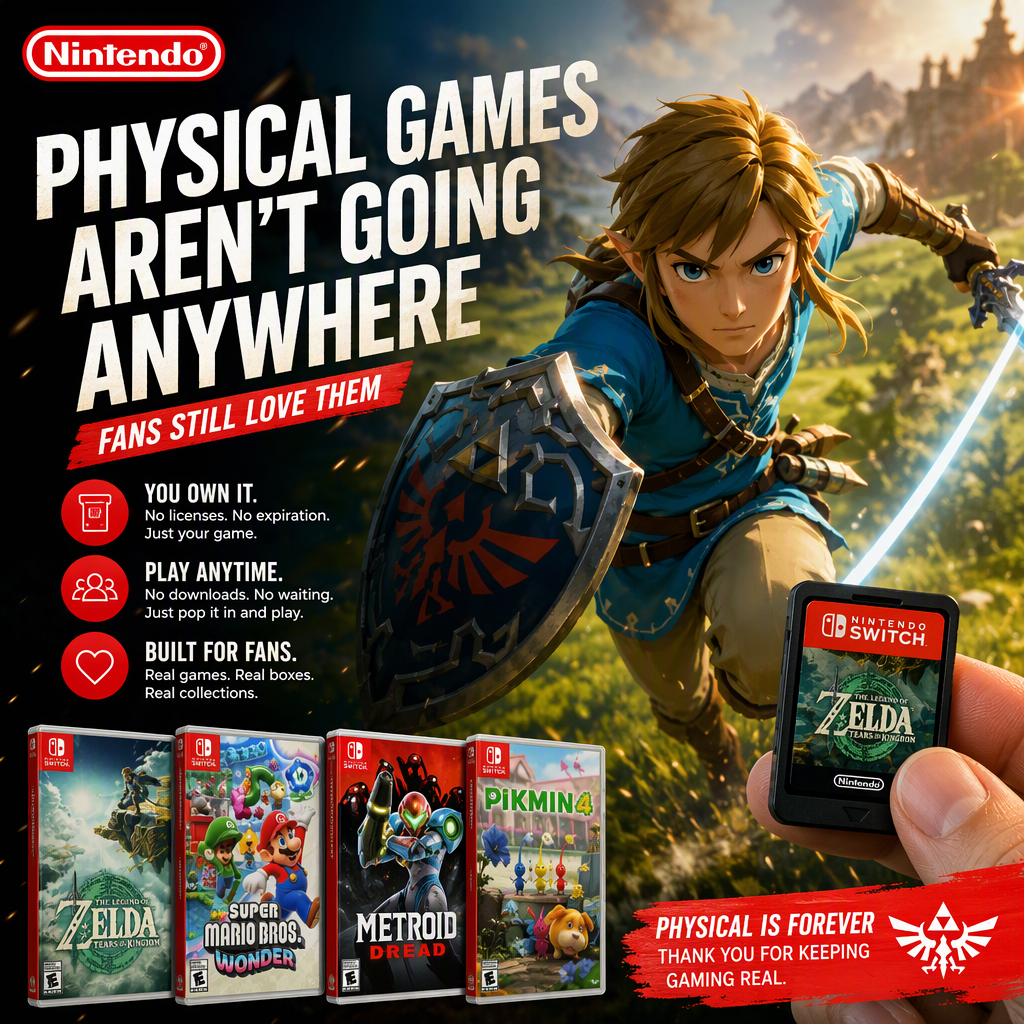
🎮 AI-drawn 可愛い fan art 'ish. No humans were harmed in the render
💡 Ownership Rebellion 🎮
Nintendo holding onto physical media is a quiet rebellion against the corporate rush to strip consumers of ownership. When digital-only gaming locks communities out of resale markets and archives, it’s not ‘progress’—it’s profitable gatekeeping disguised as innovation.
✨ Nostalgia in Your Hands
Nintendo says physical games aren’t going anywhere. That’s cute. It’s not surprising either, since Nintendo knows exactly what it’s doing when it comes to nostalgia and keeping people hooked on the tangible. The company’s brand has always leaned into a certain kind of magic, a magic that feels like holding something in your hand, a cartridge, a disc, a Switch case. They know their fans, many of whom grew up blowing dust out of NES cartridges in living rooms that smelled like fried fish and furniture polish, still want that experience. But here’s the thing: this isn’t about fans’ preferences. It’s about power and control. Physical media ain’t going anywhere because Nintendo doesn’t want it to go anywhere.
Let’s not pretend this is some sentimental move to keep memories alive. It’s business. Physical media lets Nintendo hold onto its intellectual property with a tight fist while keeping its customers on a short leash. Sure, streaming and digital downloads are convenient, and make no mistake, digital has a stranglehold on the market. But what happens when a company decides it doesn’t feel like supporting a certain game anymore? What happens when servers get shut down, or your account is hacked, or you simply want to play a title you purchased years ago but the service no longer offers it? You lose access. And don’t let anybody tell you different. When you buy digitally, you’re basically renting long-term.
That doesn’t mean physical media is perfect. For years now, games have come with “day one patches” so huge you could fill up half a hard drive. The shiny disc or cartridge you buy at the store is often incomplete without downloading updates. And Nintendo itself has pulled some questionable moves, like limiting certain physical releases, turning them into collectibles instead of widely available products. If you didn’t scramble for “Super Mario 3D All-Stars” before the artificial cutoff, you’re either buying it secondhand for a markup or you’re out of luck entirely.
When you buy digitally, you’re basically renting long-term. That doesn’t mean physical media is perfect.
Nintendo’s “no plans to ditch physical” statement plays well to the crowd who still want to own something real, something you can shove into a drawer and pull out twenty years later to show your kids. But this isn’t about honoring the past. It’s about hedging bets. Nintendo doesn’t want all its eggs in one digital basket. They’re not alone either. Sony and Microsoft may push digital storefronts and subscriptions, but they aren’t ditching physical copies yet. It’s a safer business model to keep both lanes open, and let’s be honest, Nintendo has always been about squeezing every last drop out of their products. They’ll sell the same game three times across three generations if it means keeping the cash flowing.
So what does this mean for us? Don’t take this as a reassurance. Take it as a reminder. As much as digital gaming has made life convenient, it’s good to know that physical copies aren’t dead yet. Because owning a game outright, something that doesn’t vanish when your Wi-Fi cuts off or your account gets suspended, is still worth something. It’s about autonomy. And we should never overlook how much power gets handed over when we let corporations dictate the terms of ownership.
Buy physical when you can. Trade it with your friends. Hold onto that cartridge like it owes you money. Whether Nintendo is doing this out of nostalgia or just keeping its options open, the result is the same. That little piece of plastic means something. Don’t let them convince you otherwise.
🎮 Cartridges Still Clickin’
Nintendo says physical games are here to stay, proving once again they’re the one gaming giant who doesn’t think your nostalgia shelf is obsolete.
💽 Games We Can Hold
Physical media keeps gaming accessible for communities without stable internet and protects consumer rights from digital monopolies.