

WWE 2K26 Brings Fresh Moves Without Breaking Tradition

Share
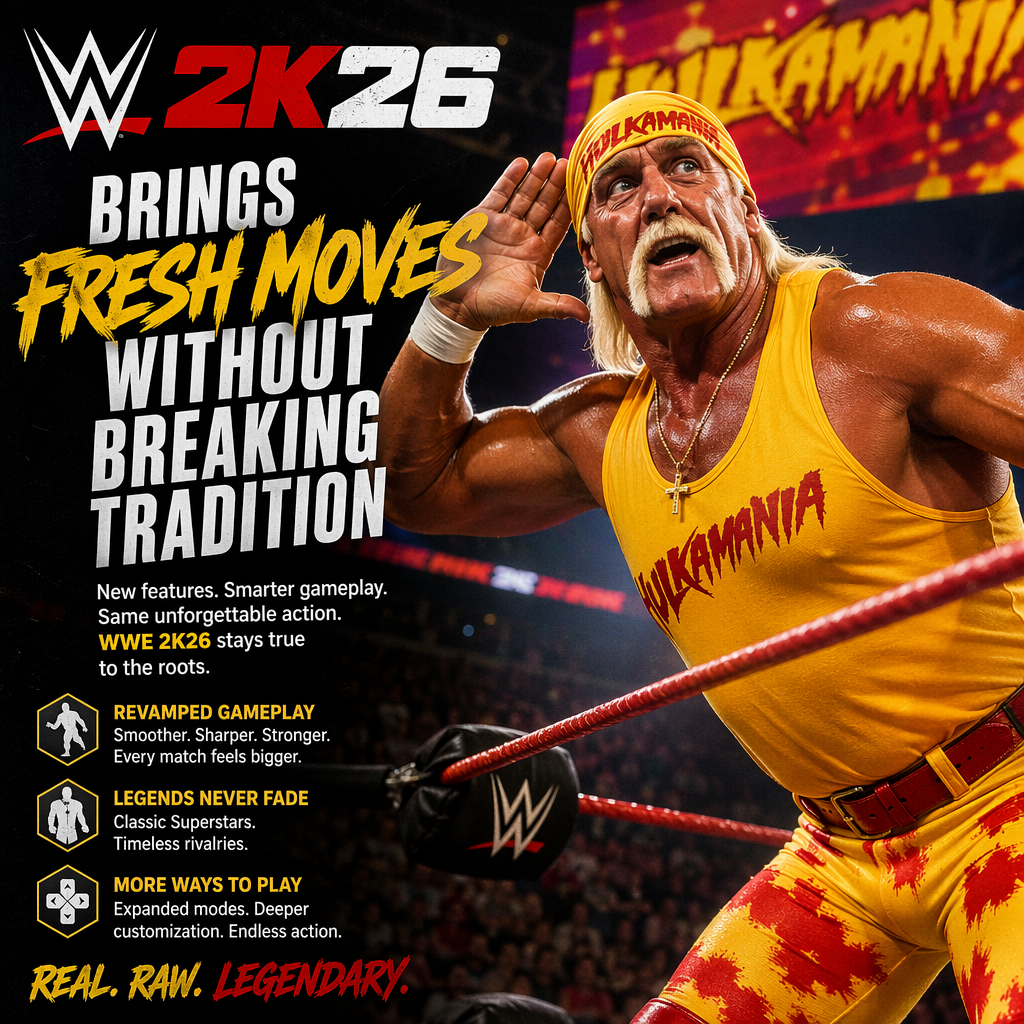
AI Generated — Azure OpenAI / gpt-image-2
✊ Legacy Doesn’t Pin Players
WWE 2K26 might be playing it safe with tradition, but let’s not pretend legacy alone pays the bills. If this game doesn’t prioritize player-driven innovation and real cultural resonance, Black gamers might find themselves watching this match from the sidelines instead of stepping into the ring.
😏 Glittered Remix Moves
If ‘fresh enough’ is all we’re getting, then WWE 2K26 is just a remix of a remix — kind of like a wrestler winning with the same old finishing move, but this time with glitter.
✨ Legacy vs. New Moves
Let’s cut straight to it: WWE 2K26 isn’t just a video game. It’s a reflection of how institutions—yes, even wrestling ones—balance the idea of “progress” with an obsessive grip on tradition. The game offers new moves, new mechanics, new ways to experience the spectacle, but let’s not pretend it’s rewriting the playbook. And you know what? That’s kind of the point. Wrestling, both in real life and in its virtual avatar, thrives on walking the line between innovation and nostalgia. But as Black folks, we know that line isn’t always drawn equally for everyone.
Here’s what we’re really talking about when we talk about WWE 2K26: representation. Sure, this year’s update boasts shinier graphics, deeper gameplay, and a few clever tweaks to make it feel fresh. But let me ask you something. When you load up your roster, do you see the depth of Blackness in this game that reflects the depth of Blackness in the sport? Are the Kofi Kingstons, the Biancas, and the Lashleys given the same narrative weight as the John Cenas of the world—or are they just flavor in someone else’s story? Wrestling has always been theater, but we know too well how that theater plays out in real life, where Black talent is used to pop a crowd, not drive the plot.
Now, to be fair, WWE’s been talking a good game about diversity in recent years, and the video game franchise has followed suit. You can create your own wrestler, design them however you want, and craft a career that breaks barriers. That’s cute.
Are the Kofi Kingstons, the Biancas, and the Lashleys given the same narrative weight as the John Cenas of the world—or are they just flavor in someone else’s story?
But let’s not forget that “create your own destiny” has always been the smokescreen for systems that refuse to do the work themselves. Why should Black players have to spend hours customizing their own existence when the default settings still scream whiteness, still center the same archetypes we’ve seen for decades?
And let’s talk mechanics for a second. Wrestling games are built on control—how you grapple, counter, and pin your opponent. But control hits different when you know you’re working within someone else’s parameters. Sure, you can tweak the sliders, finesse the gameplay to fit your style. But at the end of the day, you’re operating within a system designed for spectacle, not liberation. That’s wrestling’s blueprint, but it’s also a mirror for how structures treat Black creativity. We can stretch, remix, and innovate, but we’re still inside their ring.
” WWE 2K26 is a reminder that even in spaces meant to entertain, we’re grappling with systems of representation and inclusion that mirror the world outside our screens. It’s not just about whether the game is fun—it’s about whether it reflects us fully and fairly. Games like this are cultural products, and they shape how we see ourselves and how others see us. So when the next generation of Black wrestling fans picks up the controller, what story are we letting them play out? One where they’re the stars—or one where they’re still fighting for their spot in the ring? That’s the legacy we’re really logging into. And that’s a fight worth taking on, both inside the squared circle and beyond it.
💡 Progress Over Nostalgia
Gaming culture thrives on evolution, and when publishers lean too hard on nostalgia, Black players and creators miss opportunities to shape the future of the genre.