
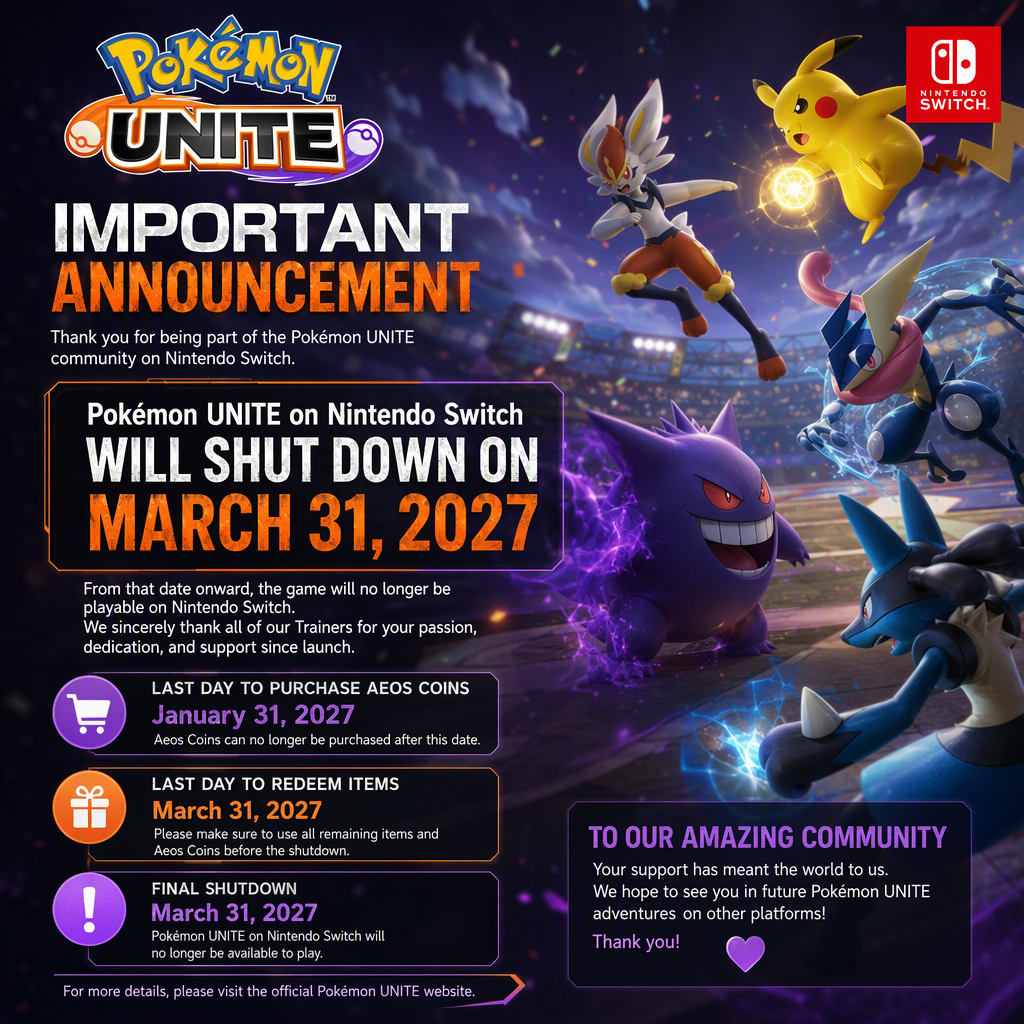
Pokémon Unite shutting down on Switch in March 2027

Share
🎮 AI-drawn 可愛い fan art 'ish. No humans were harmed in the render
⏳ Nostalgia’s Timer Ticks
Another free-to-play game bites the dust, reminding us that digital playgrounds run on timers and profit margins, not community love. Pokémon Unite’s shutdown is less a surprise and more a reminder that corporate-owned nostalgia has an expiration date.
🎮 Pay-to-Play Trap
Pokémon Unite calling it quits on the Switch feels less like a farewell and more like a quiet confirmation of what many of us suspected for years: this was a game that never really wanted us. Sure, it dangled Pikachu and Charizard like bait, but the whole setup felt designed to make players chase crumbs while Nintendo and The Pokémon Company stuffed their pockets off microtransactions. Free-to-play games are often accused of exploiting their audiences, and Pokémon Unite leaned into that critique like it was a feature. They didn’t just make it pay-to-win. They made it pay-to-enjoy.
And let’s be real: games like this don’t get shut down because they’re bad. They get shut down when they stop being profitable. The Pokémon Company’s decision to sunset Unite in 2027 isn’t some sentimental reflection on its legacy. ” It’s corporate calculus. The Switch itself is aging out, so they’re letting the platform carry the blame while they pivot resources to the next shiny thing. It’s not failure. It’s business.
But here’s what gets under my skin: Pokémon Unite had an opportunity to do something special, something rare in gaming. This was a massive franchise, with global reach, dipping its toe into a genre that’s notoriously toxic and hard to break into. The MOBA scene is dominated by games like League of Legends and Dota 2, games known for their hostile environments and gatekeeping communities. Unite could’ve been a breath of fresh air, a more accessible MOBA, bringing in younger players, casual fans, and people who don’t think “GG EZ” is a personality trait. Instead, it replicated the same exploitative systems, dressed up in bright colors and nostalgia. It wasn’t innovative. It was predictable.
Black gamers know this story all too well. We’re some of the most loyal fans out here, spending hours grinding, collecting, supporting, and building community around these games.
It’s business. But here’s what gets under my skin: Pokémon Unite had an opportunity to do something special, something rare in gaming.
And what do we get for it? The same old extractive practices. We’re asked to invest, emotionally and financially, into games that see us as wallets, not people. They’ll give us the skins, the battle passes, the special events, but they won’t give us respect. They won’t center us or prioritize our experiences. It’s just dollars in, dollars out.
So what’s the takeaway here? It’s not that Pokémon Unite is shutting down in 2027. It’s that it didn’t have to go down like this. It could’ve built something lasting, something generational, something that didn’t just try to siphon cash but actually valued the communities it attracted. Instead, it leaned into its most extractive impulses. And now it’s folding, with a bland “thank you for playing” slapped on the end like that’s supposed to mean something.
For us, this is a reminder to keep our eyes open. Pokémon Unite might be gone in a couple years, but the system that built it isn’t going anywhere. It will keep churning out games designed to milk nostalgia, exploit addiction mechanics, and make profit, not memories. If we want better, we have to demand better. Gaming can be a space for joy, creativity, and connection. We’ve seen it happen, even in glimpses. But that’s not going to come from the big names or the big dollars. It’s going to come from us. ✊🏾
🗞️ Pika’s Patch Notes
Pokémon Unite is folding in 2027, proving that even Pikachu doesn’t escape capitalism’s delete button.
When Games Vanish 🌍
When gaming ecosystems disappear, communities built around them lose cultural and economic spaces that many rely on for connection, creativity, and even income streams.